
Choose Your Fighter: How to Pick the Right INTERPOL Lawyer
There is no official qualification called “INTERPOL lawyer”. The right choice depends on the forum, the risk and the experience the case actually requires.
For a long time, one of the advantages of an experienced INTERPOL lawyer was simply knowing more about INTERPOL than almost anyone else. That advantage has not disappeared, but it is shrinking.
INTERPOL still looks, from the outside, like a monolithic black box: 196 member countries, police databases, Red Notices, Diffusions, National Central Bureaus and an organisation headquartered in Lyon that most people encounter only when something has already gone badly wrong.
The rules governing that machinery, however, are increasingly accessible. INTERPOL’s Rules on the Processing of Data are public, as are the CCF’s Statute, Operating Rules and procedural guidance.
The Commission for the Control of INTERPOL’s Files – the CCF – also publishes selected anonymised decisions and excerpts. Its proceedings remain confidential, and it does not publish everything. But outsiders can now study how it approaches recurring questions: political predominance, human rights, proportionality, the accuracy of data and the relationship between domestic criminal proceedings and INTERPOL’s own rules.
Access has become easier at the procedural level as well. Individuals can now use an online portal to submit requests for access to, correction of or deletion of data. A straightforward access request can be filed in a matter of minutes. The CCF may, of course, take months to decide it.
That is progress. Access to your own data should not require specialist counsel. I have seen firms charge more than EUR 3,500 simply to prepare a request asking whether INTERPOL held information about a client. The procedural door is now open to everyone.
So what exactly are you paying an INTERPOL lawyer for?
Not for knowing where the door is.
For knowing what to do once it opens.
And that leads to the harder question: how do you choose the right lawyer?
There is no INTERPOL bar
There is no separate legal profession practising before the CCF. There is no CCF bar exam, no special admission procedure and no official register of authorised INTERPOL attorneys. You do not even need to be a lawyer to submit a request.
That openness is intentional, and it is a good thing. The CCF is not a criminal court. Individuals should be able to exercise their rights without retaining counsel. There are no professional gatekeepers at its door.
But the absence of gatekeepers has a second consequence: subject to whatever national rules apply to offering legal services, the formal barrier to entering the market for CCF representation is remarkably low. Anyone can build a website and market themselves as an “INTERPOL lawyer”, a “Red Notice lawyer” or an “INTERPOL expert”.
An “INTERPOL lawyer” may therefore be a criminal defence attorney with twenty years of experience and dozens of CCF proceedings behind him. Or it may be someone who graduated last year with a bachelor’s degree in, say, Kazakh maritime law and built an INTERPOL website the following month. Neither needs special admission to submit the request.
The problem arises when clients mistake the absence of an entry barrier for the existence of a qualification.
“INTERPOL lawyer” is not a qualification. It is a description someone has chosen to use.
The person at the top of your search results may be an excellent lawyer. It may also be a consultant, an intermediary, a lead-generation operation or simply someone who is exceptionally good at building websites.
The CCF will not make that distinction for you. You have to.
First identify the fight
A Red Notice does not necessarily mean that INTERPOL is the problem.
It may simply reflect an ordinary criminal case and a valid domestic arrest warrant against a person who has left the country. In that situation, the decisive move may be to challenge the warrant, defend an extradition case or address the underlying proceedings rather than trying to manufacture a CCF argument where none exists.
Sometimes the best INTERPOL advice is not to fight INTERPOL.
That is one of the first things a lawyer should be able to determine: where can something useful actually be achieved? Be cautious if every problem produces the same answer – especially when that answer is the only service the lawyer sells.
Verify the lawyer
International legal work can be complicated. A serious case may require several firms, independent lawyers and local counsel. A network can be precisely what the client needs.
But complexity should not mean opacity.
Before instructing anyone, ask some surprisingly basic questions. Who will actually handle the case? Where is that person admitted to practise, and can you verify the admission? Which legal entity are you instructing – and who receives your money? Is it itself a regulated law firm, and who is responsible if something goes wrong? If a website describes someone as a “partner”, what exactly are they a partner of?
Credentials are claims. Verify them.
- Former institutional positions, intelligence backgrounds, prestigious degrees, awards and extraordinary success rates are factual claims. If they influence your decision, verify them.
- Professional titles deserve verification. In many jurisdictions, “Solicitor”, “Barrister” and similar titles have legal meanings – not merely marketing value.
- Look beyond biographies written by the lawyer himself. Decisions, publications, conference programmes, serious press coverage and genuine institutional affiliations can tell you more than another paragraph about “unparalleled expertise”.
- Success rates require particular caution. A percentage means little unless you know what was counted, which cases were accepted, what counted as success and whether unsuccessful matters quietly disappeared from the denominator.
A global law firm – or a collection of websites?
The same lawyers may be marketed under different brands for INTERPOL, extradition, sanctions, immigration and asset recovery. That may be a legitimate specialist network.
But understand what you are buying. Are you instructing a law firm, a network, an independent lawyer or a commercial platform that will refer the matter elsewhere? Those models are not the same.
Verify the entity you are instructing. Is it registered in Germany, the United Kingdom, the Seychelles or elsewhere?
You cannot invent experience
This brings us to experience. I have changed my mind about it.
When I prepared my first request for the deletion of an INTERPOL alert, I had never filed one before.
We won.
In retrospect, that may have been the worst possible learning experience. The result confirmed everything I wanted to believe at the time: work harder, dig deeper, understand the law better, question every assumption and fight relentlessly enough, and you can compensate for almost anything.
I still believe in those things. Rigorous analysis, intellectual curiosity and persistence matter. A lawyer approaching an unfamiliar problem as something to be understood rather than processed can outperform someone who has been doing the same thing routinely for years. My first case proved that experience is not everything.
The cases that followed taught me the opposite lesson as well.
You cannot invent experience.
Experience comes partly from repetition. More importantly, it comes from having your expectations corrected: arguments you considered decisive that were not; facts whose importance became apparent only later; proceedings that developed differently from what you expected; and the discovery that a technically available argument is not necessarily a strategically useful one. Experience is accumulated correction of judgment.
Clients want lawyers who win. But a lawyer whose expectations have never been corrected has learned less than their record may suggest. The next client benefits from those corrections.
There is, however, another question: experience with what?
Big Law or boots on the ground?
Some INTERPOL matters are enormous. A Red Notice may be one element of a multinational investigation involving millions of documents, complex corporate structures, internal investigations, sanctions, asset tracing and parallel proceedings across several jurisdictions.
This is where Big Law can be formidable. Fifteen associates – or two with a Harvey license – can review an extraordinary amount of material. A large firm can deploy teams across jurisdictions, reconstruct transactions and coordinate investigations on a scale that a small specialist practice cannot replicate. Sometimes that is exactly what the case requires.
But there is another question worth asking: do you actually need fifteen lawyers?
Sometimes the person missing from the team is not another lawyer. It may be a historian who understands a political conflict, an analyst who can map power structures in the requesting state, an anthropologist who understands a community from the inside, or a journalist who has investigated the events behind the prosecution.
International criminal cases emerge from political systems, institutions, conflicts, businesses and societies. Multidisciplinary teams are not inherently better, but understanding the law without that context can mean understanding only half the case. Assembling the right team begins with identifying the questions that need to be answered.
Processing power is not judgment.
A Red Notice looks different from inside a detention cell.
There is another kind of experience that cannot be reproduced by adding more people to a document review: boots on the ground.
A Red Notice looks different from inside a detention cell.
If you have represented people in custody, you know what “risk of arrest” means. It can mean an airport arrest, extradition detention, separation from family, medication that has to be organised, a company suddenly without its director and decisions taken under pressure that no legal memorandum can reproduce.
An extradition lawyer understands why time changes character once liberty is at stake. A trial lawyer knows what happens when allegations have to survive contact with evidence. There is value in having seen the whole chain.
But boots-on-the-ground experience does not solve everything either.
A good criminal defence lawyer does not necessarily write a good CCF request.
Questions to ask before you instruct anyone
- What is the immediate legal risk, and what can trigger it?
- Is the principal problem before the CCF, an extradition court, the authorities of the requesting state or somewhere else?
- Who will personally analyse and draft the case?
- What comparable matters has that person handled?
- Which facts and documents will the proposed strategy depend on?
- Which other countries, lawyers or experts may need to be involved?
- What can the proposed procedure realistically achieve – and what can it not achieve?
- What happens if you are arrested before the CCF decides?
- How are the fees structured, and which additional costs are foreseeable?
- Who is professionally responsible for the work?
The answers do not need to be comforting. In serious cases, comforting answers are often the least useful kind. But they should be specific, intelligible and connected to the facts of your case.
So who is the best INTERPOL lawyer?
There isn’t one.
A former CCF lawyer may understand the institution better. An experienced CCF practitioner may recognise patterns that published decisions do not reveal. A criminal trial lawyer may understand the prosecution and the evidence better. An extradition lawyer knows what happens when the abstract risk of arrest becomes real. Big Law may bring resources that a boutique cannot match. And sometimes the person the case really needs is not a lawyer at all.
The point is to understand the problem well enough to know which experience, resources and perspectives it actually requires.
The question is not who is the best.
The question is: what fight are you actually in?
First identify the arena.
Then choose your fighter.
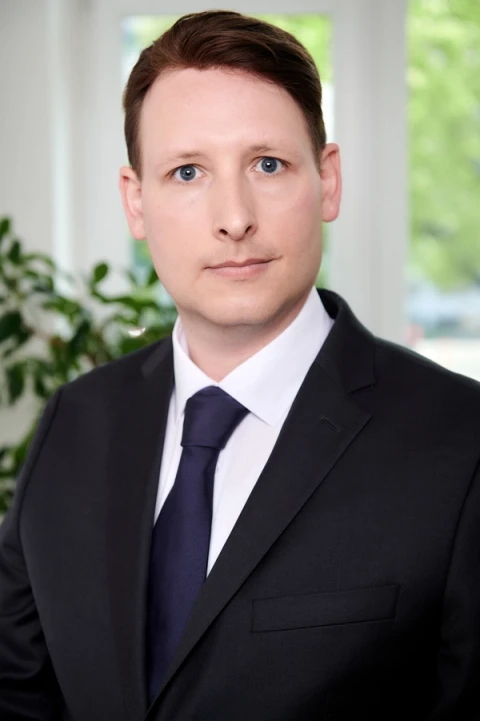
Dr. Julius Hagen
Attorney at law (Germany)
Julius represents clients in criminal matters, white-collar investigations, extradition proceedings and INTERPOL matters. He consults in English and German.