
Homicide Defence in Germany: Murder and Manslaughter
Facing a murder or manslaughter allegation in Germany: the classification turns on the sequence of events, intent and the statutory murder characteristics.
By Dr. Julius Hagen, Attorney at Law
When a homicide allegation is first made
After an arrest, search or police approach, the file may already use the language of murder while the sequence of events is still being reconstructed. The investigation combines initial findings with assumptions about the scene, causation, intent and motive. Defence work begins by identifying the factual basis for each of those assumptions.
A scene finding, documented injury or timestamp may be secure. Attribution, the meaning of a message and the act that caused the death require further analysis. The legal classification under sections 211 and 212 StGB follows from those findings. That order matters because an early label can influence how later evidence is read.
Immediate practical steps
- Do not give an unreviewed account of the incident, motive or memory to the police or other persons involved.
- Keep summonses, detention papers, search warrants and seizure records complete.
- Preserve messages, call logs, photographs, video, location data and cloud content without alteration.
- Record potential witnesses and your own contemporaneous recollection confidentially for defence counsel.
- Secure medical records and information about injuries, medication, alcohol or an acute psychological condition.
- Do not coordinate an account with co-suspects, relatives or witnesses.
Mord and Totschlag under German law
German law distinguishes Mord under section 211 StGB from Totschlag under section 212 StGB. English terms such as “murder” and “manslaughter” are useful shorthand, but they do not reproduce common-law categories exactly. Both offences require an intentional killing. Section 211 additionally requires one of the statutory murder characteristics and generally carries life imprisonment. Section 212 has a minimum term of five years, with life imprisonment possible in especially serious cases.
Perfidious killing requires findings on the victim’s unsuspecting and defenceless position and the accused’s awareness of that advantage. A financial context becomes relevant to greed only if the pursuit of gain actually dominated the offence. Anger, jealousy and humiliation take their legal significance from the history, the immediate situation and the accused’s mental state. With several defendants, intent, contribution and personal murder characteristics must be attributed separately.
Intent as the central evidential issue
A person’s mental state is rarely proved directly. Courts therefore consider the weapon or method, target area, distance, force, injuries, duration, prior threats, conflict history and conduct after the event. A highly dangerous act is important evidence, but it does not remove the need to decide whether death was recognised and accepted or whether the accused genuinely relied on it not occurring.
Forensic pathology may establish the cause of death, direction of force and possible defensive injuries. It cannot by itself determine intent. Spontaneous, rapidly developing or alcohol-related events require particular attention to the volitional element. In multi-defendant cases, the prosecution must also prove attribution and the scope of any common plan.
A statement is a strategic evidential decision
The court assesses a defendant’s account together with witness evidence, expert reports, digital material and scene findings. Inconsistencies with the investigation or the absence of factual support can reduce its weight even if the prosecution cannot prove the opposite of every detail. An immediate denial of intent to kill or memory loss confined to the critical moment should therefore be considered only after the file is known.
Whether to speak, when to speak and in what form depends on the file. Silence cannot be used as proof of guilt. A later or prepared statement may be appropriate, but it also raises questions about adaptation and credibility. The decision should follow a comparison between the proposed account, the existing evidence and the likely procedural consequences.
In a German murder or manslaughter case, the decision to give a statement should be based on the actual investigation file. We can notify the authorities that we act, request access to the file and advise whether, when and in what form a statement should be made.
Scene evidence, autopsy findings and digital data must form a coherent picture
Homicide files often combine DNA, blood patterns, fibres, weapon findings and autopsy evidence with emergency-call records, CCTV, phone and location data, chats, searches and witness accounts. Each source has limits: continuity of handling, contamination, technical accuracy, memory effects or ambiguous language.
Each item of evidence should be analysed by asking which fact it establishes and which inference investigators add. Location data may narrow the geographical area; additional evidence is required to place a person in a particular room. Deleted communications acquire weight through their timing, content and technical context. Injury and defence marks must likewise be compared with the alleged sequence of movement. This produces an overall assessment that can be tested rather than merely asserted.
Proceedings before the German Schwurgericht
Mord and Totschlag are tried at first instance by the specialised criminal chamber of the Regional Court known as the Schwurgericht. Defence representation is mandatory in serious felony proceedings. Pre-trial detention is common, so the early case strategy may also involve a detention review, access to the file, expert evidence and preservation of material not yet secured by investigators.
There is no full appeal rehearing of the facts after a first-instance Regional Court judgment. A Revision reviews legal error; it does not repeat the trial evidence. Factual weaknesses, evidential applications and admissibility objections therefore need to be developed in the proceedings in which the evidence is heard.
How We Conduct Homicide Defence Cases
- nationwide defence before German criminal courts, including specialised homicide divisions;
- representation during the investigation, in pre-trial detention and after an indictment has been filed;
- structured review of extensive investigation files;
- assessment of forensic pathology and digital forensic reports;
- involvement of independent experts;
- defence as part of a legal team or as additional privately instructed counsel;
- coordination with foreign lawyers in cases involving an international dimension.
The defence tasks in the individual case
The work begins with a reliable chronology: the preceding conflict, last confirmed contact, movements, interruptions, rescue efforts and post-event conduct. Cause of death, causation, identity or participation, intent, any murder characteristic, self-defence, withdrawal from an attempt and criminal responsibility are then examined as separate issues.
A sustainable defence position remains consistent with the established facts, exposes weak points in incriminating inferences and treats unresolved matters as unresolved. Depending on the file, it may support termination of proceedings, a different legal classification, rejection of a murder characteristic, acquittal or a defensible sentencing position.
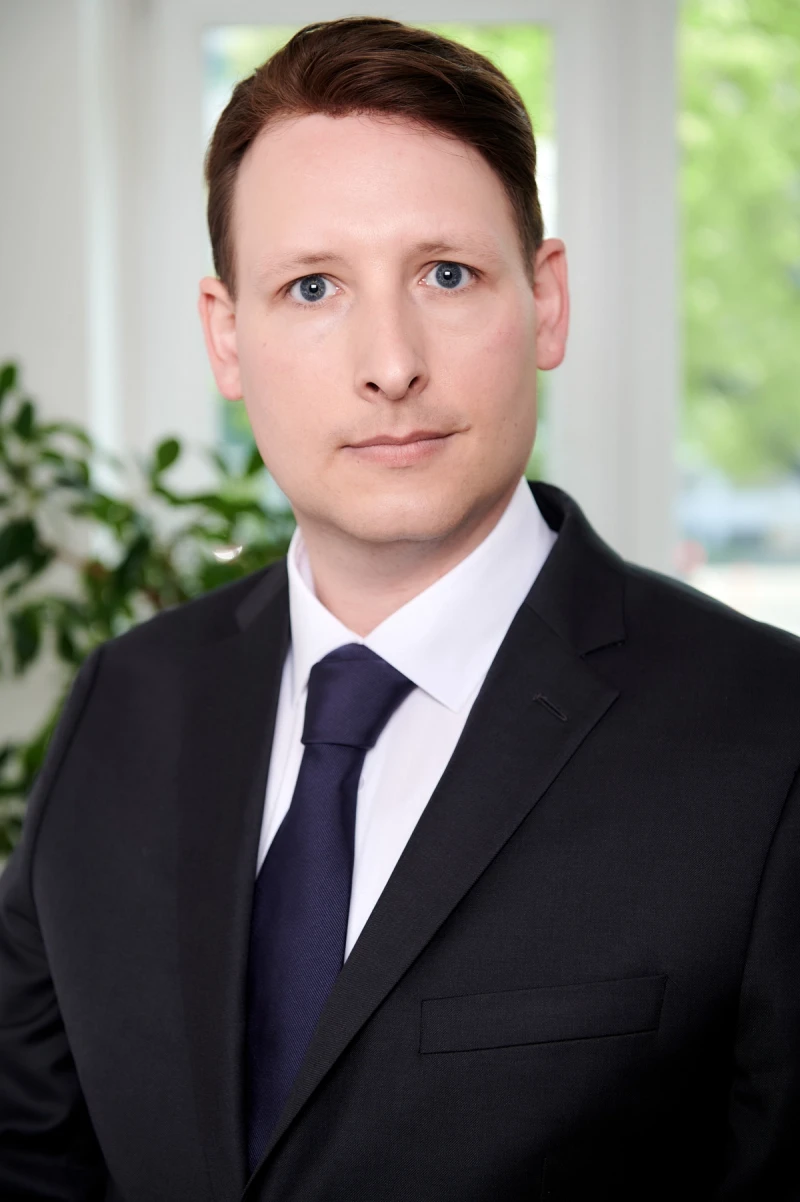
Dr. Julius Hagen
Julius represents clients in criminal matters, white-collar investigations, extradition proceedings, INTERPOL matters and commercial disputes. He consults in English and German.
Related Topics
FAQ
Contact
Fill out the form below and one of our attorneys will contact you to discuss your legal matter.
Contact Information
You can also reach us directly using the contact details below. We are available to answer your questions and schedule consultations.